Grey Wisp Hall: Silent Testimony of the Midwife
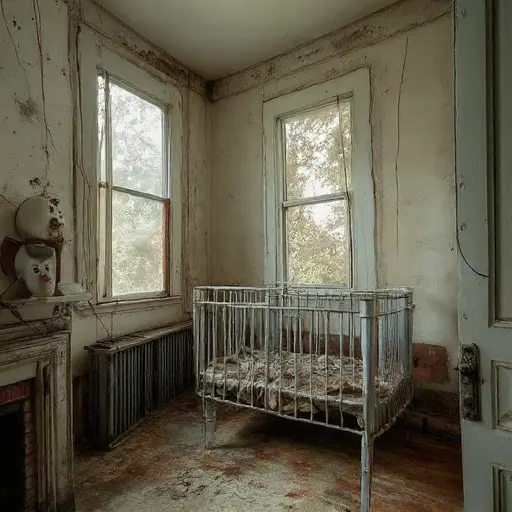
The history of Grey Wisp Hall is inextricably linked to the ebb and flow of life and death, a professional connection embodied by Mrs. Clara Pendelton, who served as the estate’s Registered Midwife from 1898 to 1912. Unlike residents tethered to the physical wealth of the house, Clara’s domain was human fragility, a truth traced through the remnants of her small, orderly living suite on the first floor. The room, which doubled as her consultation space, still held a sturdy wooden examination table, its thick leather padding cracked and desiccated. The air here was sharp with the faint, residual scent of carbolic acid and dried herbs. On a small, bolted shelf, rows of empty glass vials and stoppered bottles stood like sentinels, labelled in precise copperplate: Tincture of Digitalis, Ergot Extract, and Laudanum. The atmosphere was one of quiet, dedicated professionalism, yet the sudden Silent abandonment of her vital supplies suggested an immediate, unscheduled cessation of her practice.
The Book of Records
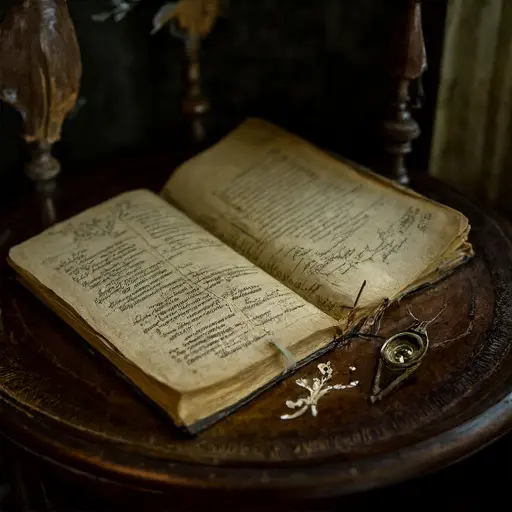
The core of Clara’s story resided within her Book of Records, a heavy ledger detailing every birth she attended in the surrounding parish and within Grey Wisp Hall itself. The entries were chillingly factual, recording names, outcomes, and payments. A pattern of high infant mortality emerged between 1910 and 1912, particularly among the poorest families she served in the village, a silent epidemic of unknown cause. Then, a series of five successive entries in the spring of 1912 recorded the stillbirth of infants belonging to wealthier estate families, all within a four-week period, a statistically improbable cluster. The final entry, dated May 14, 1912, bore no name, only the words: “Failure. Too Silent. No breath returned.” The handwriting was noticeably shaky, a stark contrast to the precise script preceding it. Below the entry, where a fee would normally be recorded, was a single, long smudge, as if a hand had wiped the page in despair.
A Box of Personal Effects
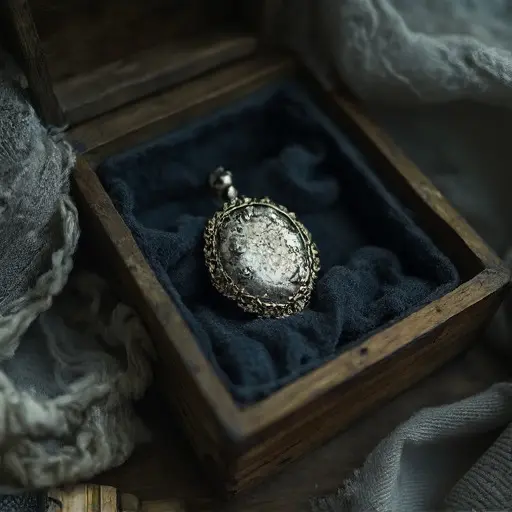
No records exist documenting Clara Pendelton’s life past that final May entry. The house offered one last, deeply personal clue: a small, cedar-lined box found tucked into the bottom of an empty linen press in her room. Inside, amongst a few strands of dark, grey-streaked hair tied with a black ribbon, was a single, tarnished silver locket. It was firmly closed and resisted opening. It was not until the locket was carefully opened that the final, Silent piece of the puzzle was revealed: two tiny, sepia photographs, one of a severely stern man in a high collar, the other a small, smiling girl of about five years old, both unfamiliar. The overwhelming impression was of a professional life violently interrupted by a personal catastrophe, leaving behind only the cold, factual records of a dedicated midwife whose work, and life, had simply ceased, leaving the manor to hold its secrets.
Would you like me to generate the Next article following the strict guidelines?