Withered Notes from the Untold Attic of Hemlock’s Glebe
The Roof Line and the Inspector’s Tools
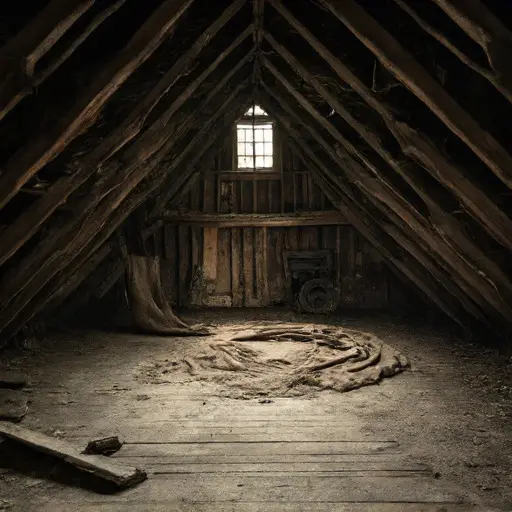
Hemlock’s Glebe was an expansive, multi-story property with a complex slate and copper roof system. Our focus centers on Mr. George Talbot, an architectural roof inspector who specialized in structural integrity and drainage systems from 1905 until 1923. Talbot’s profession demanded extreme physical risk, meticulous observation, and detailed structural knowledge. He lived in the service wing of the Glebe and was widely respected for his exhaustive work. He disappeared in the late autumn of 1923, following a severe coastal storm, with no record of his body or a formal administrative explanation, leaving his disappearance forgotten by the immediate post-war confusion.
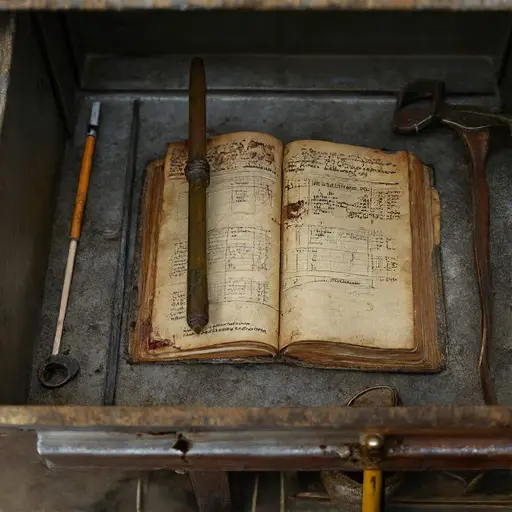
His working life was immediately apparent in the attic. We found his primary tools inside a heavy, galvanized iron tool chest, secured with a rusted padlock. Inside, meticulously organized, were his specialized instruments: a long, thin plumb-line, several different gauges for measuring slate and timber dimensions, and a sturdy, brass-handled claw hammer, its head polished by constant use.
Tucked beneath the lining paper of the chest was a small, thin, black oilcloth-bound logbook titled Structure Fatigue and Load Bearing Analysis. This was his private, detailed ledger of every structural defect and every near-failure he had personally observed and repaired. The final, detailed entry, dated October 10, 1923, noted a dangerous failure in a main copper gutter on the west wing.
The Final Warning and the Unused Rope
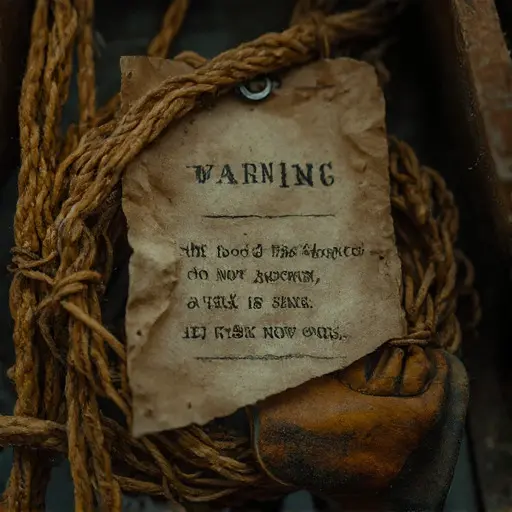
Talbot’s logbook ended with the structural failure of the main gutter, suggesting he was about to address the problem. The question of his abrupt departure was solved in a small, recessed closet in the attic eaves, where he stored his safety equipment.
The closet contained several coils of heavy, unused hemp safety rope, neatly looped and hung from iron hooks. Taped to the central coil was a sheet of heavy, brown builder’s paper. On it, written in his bold, confident hand, was a simple, stark warning: “The load has shifted. Do not ascend. All risk now ends.”
The note, a final professional assessment, was addressed not to his employer, but to any future inspector. The fact that he left behind his essential tools (the chest) and his entire stock of safety equipment (the rope) confirms he did not leave for another job. The warning note, his final professional communication, suggests he understood the structural danger was now absolute and that his duty had ended with the failure he recorded. The profound silent atmosphere of Hemlock’s Glebe is the echo of the inspector who recorded the house’s final, irreversible flaw, leaving his lost assessment taped to his unused safety equipment, a final, chilling act of self-preservation and professional closure.