Hushed Remains of the Piano Tuner in Fallowbrook Cottage

The Tuning Kit and the Technician’s Routine
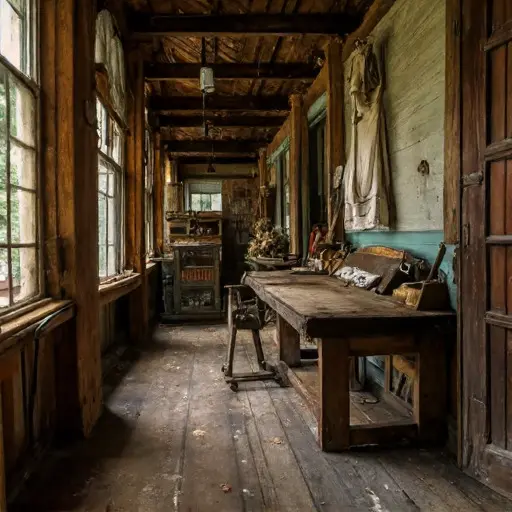
Fallowbrook Cottage was the home and workshop of Mr. Edwin Shaw, a piano maintenance technician and tuner who worked across the county from 1890 until 1914. Shaw was known for his dedication to precision and was a familiar figure in the grander estates, where he maintained the parlor instruments. He lived a life centered on the precise science of sound and the mechanical maintenance of complex wooden structures. His wife had passed away years before, and he maintained a rigid, professional schedule. The record of his end is vague; he simply failed to appear for a scheduled appointment and was later found to have abandoned the property in 1914.
His professional life was centered in the small, glassed-in porch at the rear, which he used as a final staging area for his tools. Here, the tools of his trade remained.
We located a heavy, leather-bound satchel, stiff with age and damp, tucked beneath a workbench. Inside, meticulously organized, was his complete tuning kit: a set of polished steel tuning forks, each marked with a specific frequency (A-440 was worn smooth from use), a variety of felt mutes, and several specialized tuning hammers with worn wooden handles.
The Uncompleted Contract and the Broken Metronome
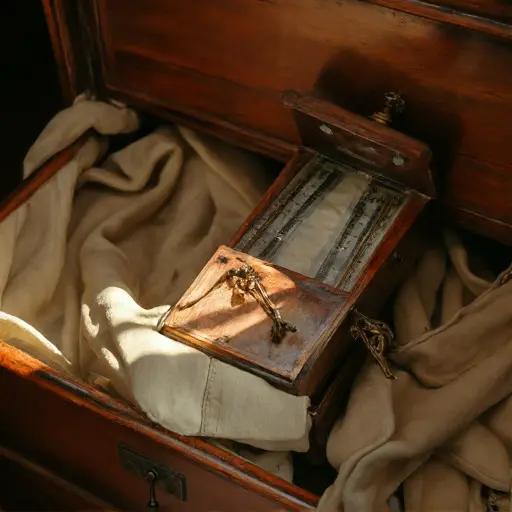
The mystery of Shaw’s disappearance was not solved by financial records, which were orderly, but by a small, personal object found in his bedroom. In a drawer beneath a stack of neatly folded, faded cotton shirts, we found a small, heavy wooden metronome, its mahogany case finely crafted. The pendulum was detached and lay beside it, the thin, winding key bent and broken.
Tucked into the hinged door of the metronome was a slip of paper—a short, handwritten note on the letterhead of a nearby large estate. It was an acceptance of a contract for a substantial, long-term repair job on their concert grand piano, signed and dated two days after his last known movements. The contract, an opportunity that would have secured him financial comfort for a year, remained unfulfilled.
The broken metronome and the uncompleted contract speak not of financial ruin or flight, but of a catastrophic, sudden cessation of time and ability. The evidence suggests a swift, physical collapse, a life regulated by the precise, relentless rhythm of the metronome suddenly and irrevocably stopping. He had the money and the work; he simply did not have the time. The cottage’s silent atmosphere is not one of lingering despair, but of the acute, disorienting void left by the sudden, mechanical failure of a life defined by perfect tempo and measured precision.