Hollow Silence at Ashmoor’s Gatekeeper Lodge
The Service Quarters and the Curator’s Inventory
The small lodge was the former residence of Mr. Ernest Beaumont, who served as a manor library curator for the nearby, much grander Ashmoor Estate from 1895 until his abrupt departure in 1919. Beaumont, according to archival employment records, was responsible for the cataloging and maintenance of the Estate’s extensive collection of rare books and documents. We found no personal letters detailing his fate, but his profession left a detailed, material footprint in the modest service quarters attached to the lodge’s rear.
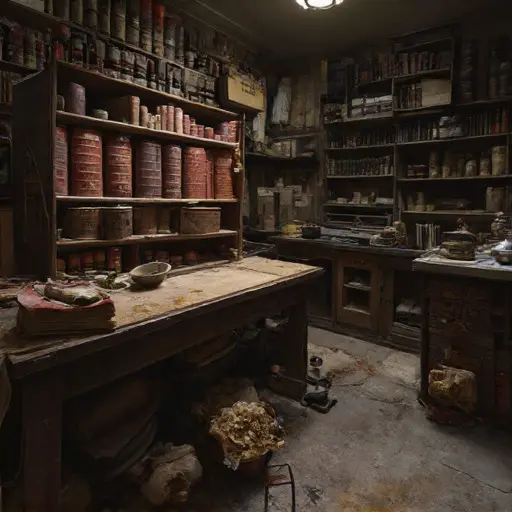
In a small, windowless pantry, clearly converted into a workshop, stood a solid, scarred workbench. Scattered across it were the tools of his trade: small, precision-ground scrapers for removing old bindings, several jars of dried, cracked bookbinder’s paste, and a collection of fine-tipped leather working needles. The most significant finding was a massive, hand-indexed card catalog, its drawers still stiff with disuse. This inventory listed thousands of volumes, meticulously detailed with condition notes and provenance, yet stopped abruptly on an entry for ‘Cicero’s Epistles’ dated January 14, 1919.
The Vanished Record and the Locked Desk Drawer
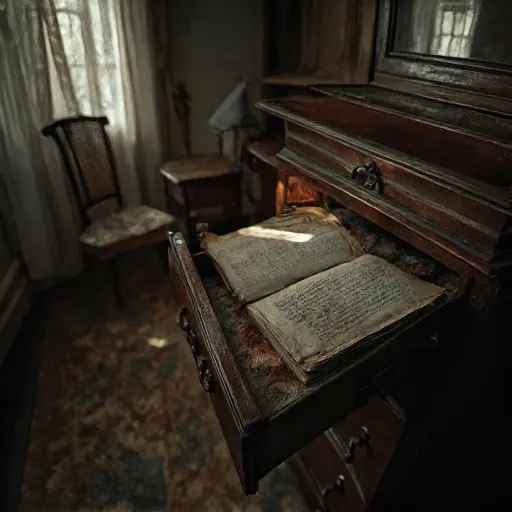
Beaumont’s fate was complicated by a gap in the Estate’s records: the transfer of the library keys and the final annual condition report, due in March 1919, were both missing. We located his small, personal office adjacent to the master bedroom, which held a mahogany secretary desk. The top was clear, but the main lockable drawer was stubbornly secured.
After careful opening, the drawer yielded not personal effects, but a small, heavy, cloth-bound notebook titled ‘Record of Anomalies.’ This was not a diary, but a private supplement to his official duties, meticulously logging books that had been moved, defaced, or taken without authorization from the main library. The final entry, written with a frantic, uncharacteristic pressure that nearly tore the page, noted the unauthorized removal of a 17th-century agricultural treatise and a corresponding entry for a substantial withdrawal from Beaumont’s personal savings account made on the same day in February 1919.
The juxtaposition was stark: a disciplined professional life undone by a secret, material transaction involving a forgotten book. Mr. Beaumont did not simply leave; his departure was financially executed and professionally obscured. The Lodge’s silence is not one of mourning, but of a secret successfully buried—the cost of a rare book having outweighed the value of his entire ordered existence, reducing a twenty-four-year career to a single, withered line in an unauthorized ledger.