The Shadowed Ledges of Corvian Tower: The County Notary Assistant’s Ledger
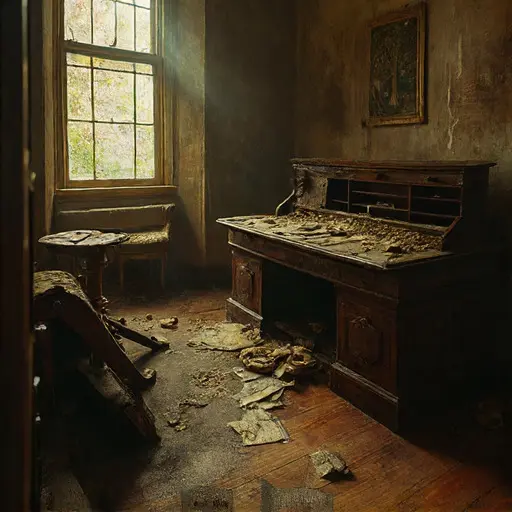
Corvian Tower, a unique structure known for its robust stone construction, was the home of Mr. Henry Davies, a county notary assistant who specialized in the official witnessing and stamping of minor civic and estate filings. Davies’s role was one of procedural rigor and confidentiality from 1890 until 1915, when he contracted a severe, rapidly moving typhoid fever and died within a week. Due to the high risk of contagion and the immediate need to seal the property, the local authorities locked the house and secured his papers, leaving the residence untouched for fear of cross-contamination until well after the threat passed and the estate’s value had dwindled to nothing.
The Stamping Room’s Frozen Duty
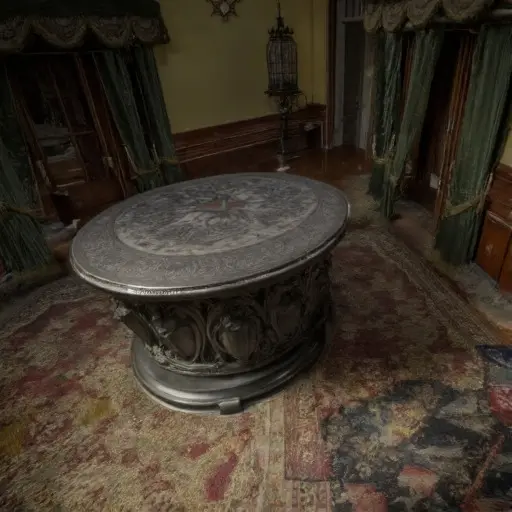
Davies’s meticulous life was most evident in a small, windowless interior room he used solely for his official stamping and sealing work. The atmosphere was dry, carrying a distinct, sharp chemical odor of old sealing wax and residual stamping ink. A small, waist-high iron safe was set into the wall, its heavy door left slightly ajar, revealing stacks of official forms and heavy, brass-bound logbooks. On a small, bare pine table, a collection of heavy brass seals and notary stamps lay scattered, tarnished black and green with oxidation, their intricate designs obscured by grime. Beside them, three small, dried-out pads of different colored inks—red, blue, and black—were brittle and fused to their metal casings. The floor, covered in rough-cut flagstones, was permanently marked by dark, oily spots where ink had been spilled and tracked over the years of active use.
The Personal Inventory of Fault
Tucked deep into a narrow cupboard beneath the stairs, Davies’s most private document was found: a small, plain vellum-covered book. This was his private record of instances where he suspected legal malpractice or document fraud in the filings he processed, but lacked the official standing to stop. Each entry detailed the filing number, the notary involved, and his quiet moral judgment on the deception, noted in a compressed, almost coded script. The final entry, dated the day before his illness took hold, detailed a major land transfer he believed was fraudulent, ending with a plea to “God secure the paper.” The paper was thin and worn, smelling of the damp wood of the cupboard, a testament to the internal conflict between legal duty and personal conscience.