Beneath the Glimmering Surface of Stonehaven Place: The Fabric Specialist’s Final Threads
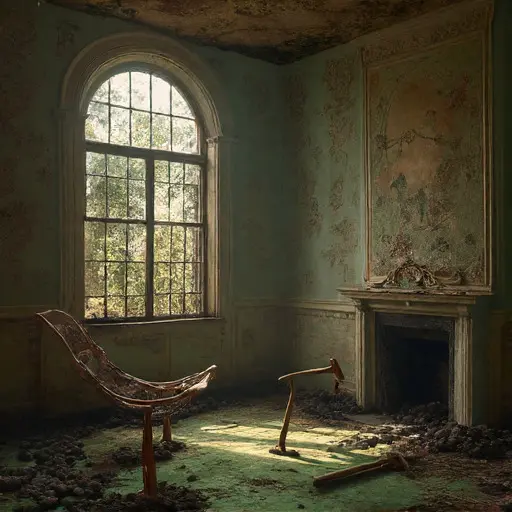
Stonehaven Place, a house noted for its fine textiles and decorative arts, was the residence of Miss Eliza Merton, a highly skilled fabric and textile restoration specialist. Merton’s meticulous work involved the repair and preservation of rare tapestries, historic clothing, and antique upholstery. She lived a quiet life dedicated to her craft until her death from chronic illness in 1919. The house was promptly sealed by a legal conservator because Merton had left her extensive collection of rare fabrics to a museum that took years to officially claim and catalogue the assets, leaving the house suspended in its working state.
The Dye Room’s Palette of Failure
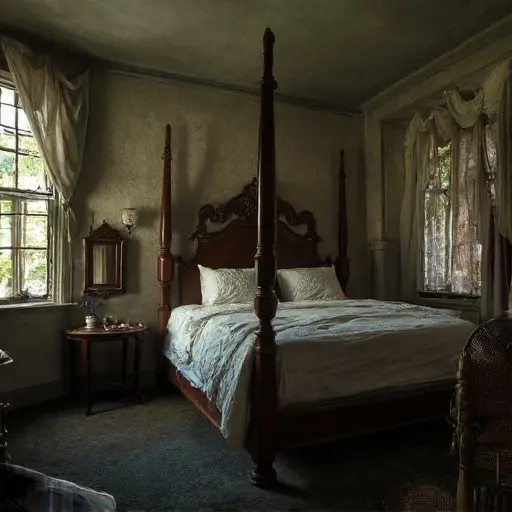
Merton’s specialized preparation area was a small, well-lit annex on the first floor, adapted for her complex chemical work. The air here was dry and held the potent, acidic smell of old chemical fixatives and residual dye powders. The floor was covered in dark, stained ceramic tiles, permanently marked by various colorful spills. A heavy wooden workbench was littered with small, glass beakers and measuring flasks, all covered in a fine layer of dust and dried residue. Against the wall stood a shelf holding dozens of small, corked glass jars, each containing a powdered or crystalline substance—various pigments and mordants used for color matching and restoration—their labels faded and brittle. The strong light from the window revealed microscopic motes of colored dust suspended in the air, a chemical ghost of her artistry.
The Inventory of Fragile Beauty
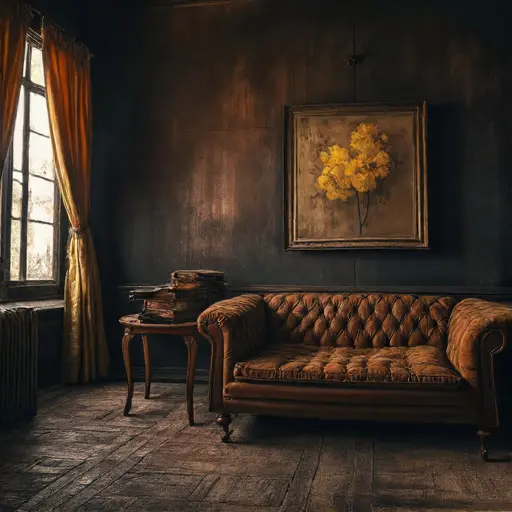
In a fireproof chest kept in her study, Merton’s most significant possession was found: a massive, hand-stitched catalogue of every restoration project she had undertaken. It was a meticulous record, bound in heavy canvas, with a small, hand-painted swatch of the original, unfaded fabric attached to each entry, documenting its condition, the process used, and the date of completion. The final entry, detailing the repair of a rare Elizabethan lace shawl, was dated three days before her death, the work noted as “Incomplete—awaiting final steam-set.” Tucked inside the last page was a small, personalized thimble of polished silver, its surface worn thin by years of contact, a silent, intimate tool of her precise, delicate work.