A Look Inside Cragmoor Citadel: The Told Story of the Manor Grounds-keeper
Cragmoor Citadel, a sprawling property requiring constant maintenance, was primarily overseen by Mr. Samuel Gentry, the manor grounds-keeper from 1880 until his sudden death in 1912 from a fall while trimming a high cedar tree. Gentry was responsible for the entire external perimeter, the gardens, and the structural integrity of the outbuildings. Following his death, the main house ownership passed to a distant relative who preferred city life, deciding instead to simply seal the entire estate, unwilling to hire a replacement grounds-keeper or invest in the property’s upkeep, thus leaving Gentry’s immediate work life perfectly intact.
The Garden Tool Repository

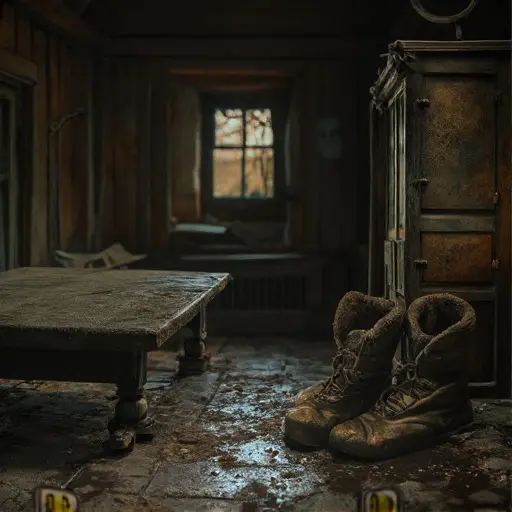
Gentry’s true domain was the massive, stone-built potting shed, a separate structure adjacent to the main vegetable patch. Inside, the atmosphere was dense with the dry, potent smell of aged topsoil, dried moss, and residual bone meal. The walls were lined with racks of hand tools—spades, forks, and hoes—their wooden handles dark and smooth from years of constant use, now completely covered in a film of undisturbed dust and fine cobwebs. On a heavy wooden workbench, a series of specialized hand-forging tools for repairing his own implements lay scattered, the metal tarnished black with oxidation. The central feature was a heavy, iron-bound wheelbarrow, its tire flat and its wooden sides cracked, resting beneath a window where the light illuminated the intricate patterns of decay on its surface.
The Ledger of the Land
Tucked into a small, weatherproofed wooden box in the potting shed was Gentry’s personal grounds ledger. This was not a payroll document, but a detailed, hand-drawn map of the entire estate, annotated with notes on soil conditions, drainage patterns, and the exact health assessment of every major tree. More significantly, it contained a series of meticulous, dated entries documenting the exact spot where he had secretly buried specific gardening tools or caches of high-quality seeds he could not afford to lose during harsh winters, a private act of land stewardship. The paper was stiff and had the rough texture of being exposed to dampness, smelling faintly of earth and dry woodsmoke.