The Withered Library of Blackwood Keep: An Inheritance Archivist’s Fate
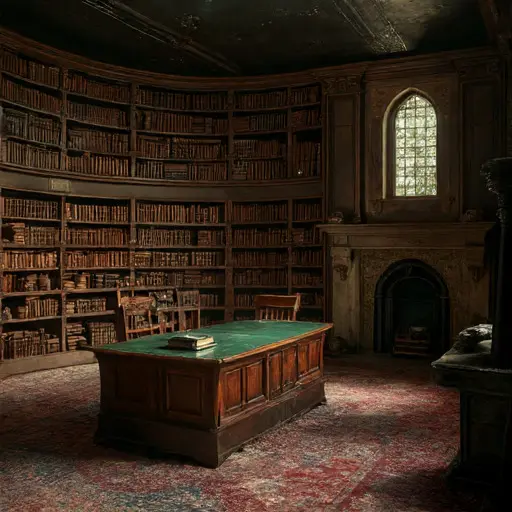
Blackwood Keep was not a residence of sprawling life, but a functional house built around a dense archive. Its last true resident was Mr. Wallace Pender, an inheritance documentation archivist, whose highly specialized and confidential work involved tracing the complex legal lineage of properties and fortunes across the county. Pender was found deceased at his desk in 1910, having suffered a cerebral hemorrhage. His estate, ironic given his profession, was immediately tied up in a legal quagmire concerning the ownership of the documents he held—a matter so complex it left the house completely abandoned for fifty years, his work literally sealing the building shut.
The Catalog of Unclaimed Lives
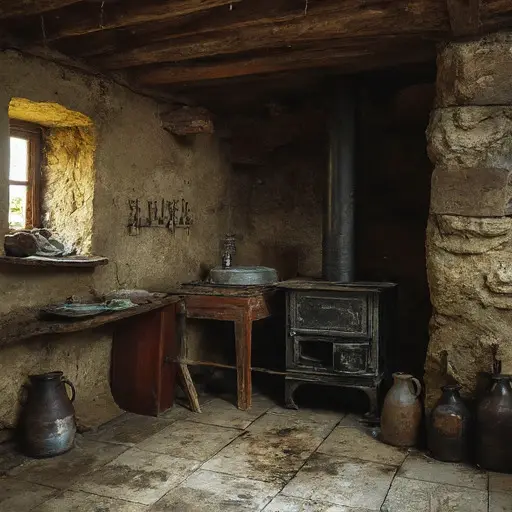
Pender’s life was meticulously recorded in the very format he used for others. In a hidden wall safe, disguised by a loose mahogany panel, was his personal set of index cards. These were not family photos, but a detailed cross-reference system for his own archives, meticulously listing every family, every estate, and every complex, decades-long dispute he had overseen. The cards were perfectly preserved, smelling of fresh paper and glue, a deliberate contrast to the decay of the surrounding room. Tucked behind this system was a small, cloth-covered notebook detailing the personal disposition of the cases—his quiet moral judgments on who deserved the inheritance and who did not, a profound, unofficial record of human greed and injustice only he had witnessed.
The Service Passage of Personal Effects
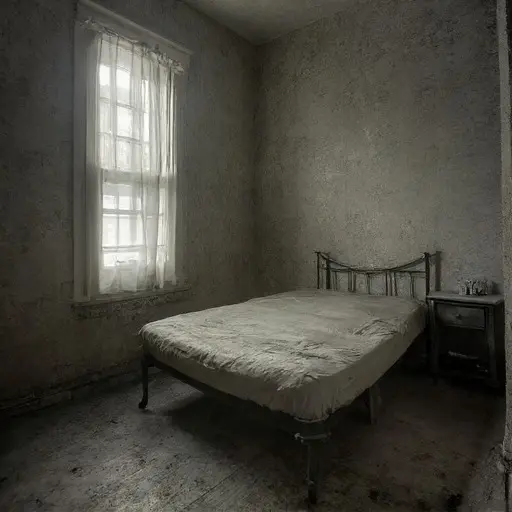
The true glimpse into Pender’s day-to-day routine was found not in the archive rooms, but in the small service passage leading to his private bedroom. Here, tucked into a narrow closet used for coats, were his personal effects that suggested a life beyond documentation. A heavy, wool traveling coat, stained with old mud from endless journeys to registrar offices, still hung from an iron hook. Its pockets contained a few crumpled train tickets, dated 1909, and, poignantly, a small, polished wooden whistle. This whistle, used to signal a rural cab service he regularly employed, was smooth from constant handling, a tactile object of constant, reliable movement in a life dedicated to immovable records.