Discovering Farrow’s Croft: The Hollow Life of the Census Field Recorder
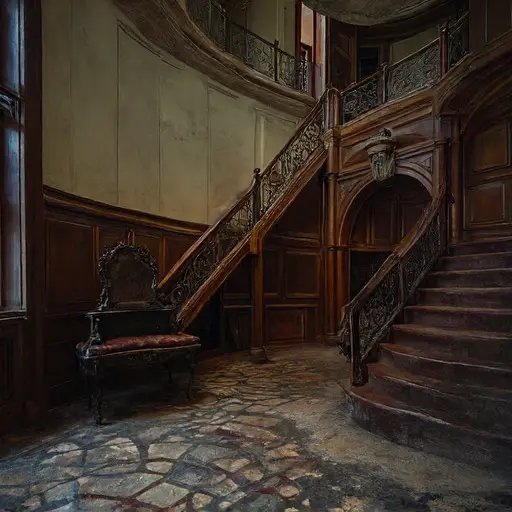
Farrow’s Croft, a respectable but relatively modest Victorian residence, was the last known home of Mr. Tobias Hale, a highly organized census field recorder for the district from 1895 until his sudden death from influenza in 1918. Hale’s duty was to canvass the rural populace, ensuring every inhabitant was documented, counted, and correctly classified for the crown. His fate was to leave behind a perfectly organized life in a house that, soon after his passing, became trapped in probate for decades, left exactly as he had left it, sealed by legal dispute rather than intentional preservation.
The Office of Unfinished Counting
The back room of the ground floor served as Hale’s professional office, and it was here that the tangible residue of his meticulous career remained. A tall, narrow cupboard of plain pine, secured by a small brass padlock, was filled not with personal effects, but with rolls of government-issued census forms, bound neatly with twine and labeled with geographical sectors. The paper was dry, brittle, and had absorbed the environmental history of the room, smelling strongly of wood pulp and old glue. On the heavy, worn desk sat a collection of small, leather-bound diaries. These were not personal journals, but route books—detailing the exact time of day he visited each household, the weather conditions, and small, non-official notes on the demeanor of the residents, an emotional metadata layer laid over the dry figures. One entry, dated July 1917, described a three-mile walk through a severe thunderstorm and ended simply: “The count must be accurate, irrespective of the elements.”
A Catalog of Human Lives
The most profound discovery was a large, cloth-bound folio hidden in a box beneath the desk. It was an unofficial, handwritten catalog Hale compiled of individuals he had visited who consistently resisted being counted or deliberately provided false information. Unlike the official forms, which were sterile, this book contained detailed pen-and-ink sketches of their homes, their perceived reasons for avoidance (fear of taxation, conscription, or social stigma), and the complex relationships he slowly uncovered between neighboring families—the messy, unquantifiable truth underlying the simple numbers he was paid to record. This document was the silent confession of a man who knew the limits of data, and who found himself drawn into the complexities of human life beyond his official mandate. The pages, thin and heavily worked, felt like holding the raw, unedited script of a society only glimpsed through official records.