🪡 Eerie Silk Scraps of Thornwood Hall and the Hushed Seamstress
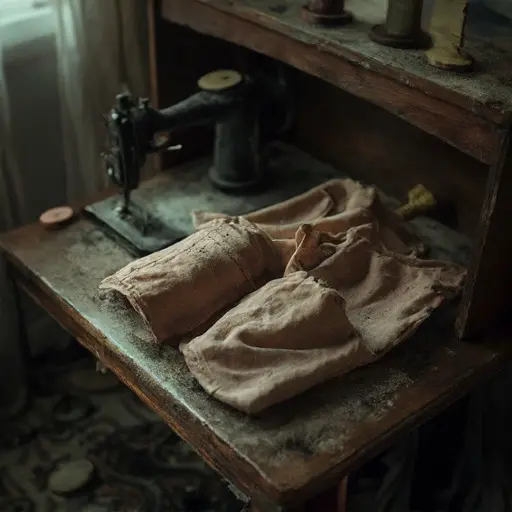
Thornwood Hall was known throughout the region for the exquisite wardrobes of its female residents, a reputation maintained by the skill of Mrs. Clara Fielding, the highly sought-after aristocratic wardrobe mistress. From 1898 to 1914, Clara lived in a small, dedicated suite connected to the main master bedrooms, her existence defined by the precise measurement of silk, lace, and velvet. Her domain was a world of fashion and fabric, a silent observer of the family’s shifting fortunes displayed through their attire. In the summer of 1914, just as the last grand ball was held before the war, Clara disappeared, leaving her entire toolkit, including her cherished set of silver shears, lying on her work table.
The Ledger of Forgotten Measures
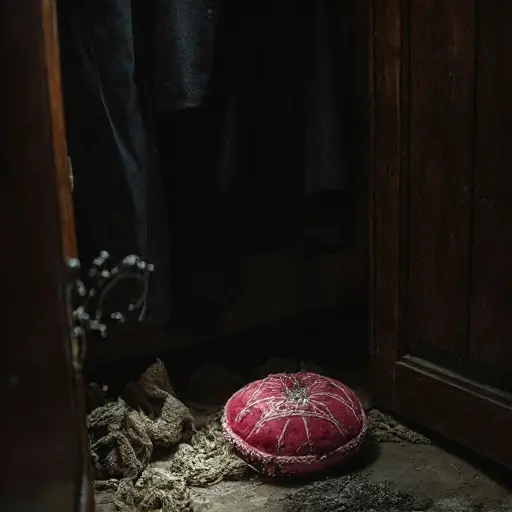
Clara’s work required precise records of the ladies’ changing sizes, styles, and fabric usage. This information was kept in a small, leather-bound notebook with gold-edged pages, titled The Book of Measures. It was found nestled under a pile of heavy tweed fabric samples. The first two-thirds of the book contained meticulous measurements: bust, waist, hem length, and collar size, all neatly labeled. However, the final third of the book was filled with small, detailed drawings of fabric swatches and color palettes, all marked with a black ‘X.’ On the final page, beneath a sketch of a sumptuous emerald silk dress, Clara had written a single, definitive sentence: “The weight of the material exceeds the weight of the person.”
The Vanished Dress Form
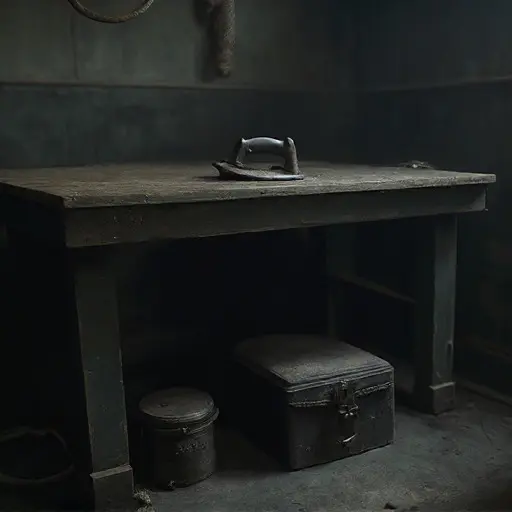
One of Clara’s essential tools was her primary wooden dress form, tailored precisely to the measurements of the main lady of the house. This form, usually a fixture in her fitting room, was conspicuously absent. However, beneath a loose floorboard near the large, ornate window, the investigator found not the form, but a small, carefully folded piece of raw silk, dyed a deep, midnight blue. Sewn into the center of the silk swatch were three small, intricate pockets. Inside these pockets were not thimbles or needles, but three tiny, tarnished silver bells, the kind used to embellish fine opera cloaks. The bells, when shaken, made no sound, their clappers having completely rusted into place—a perfect symbol of the silent, buried secrets the room contained.
The wardrobe mistress, whose life was measured in the careful construction of beauty and façade, executed a final, complete, and untold vanishing act. She left behind her silver shears and her carefully cataloged disappointments, allowing the manor to hold the hushed memory of the seamstress who quietly stitched her way out of the fabric of Thornwood Hall society.