📝 The Hollow Watch of Crestwood Abbey and the Forgotten Reporter
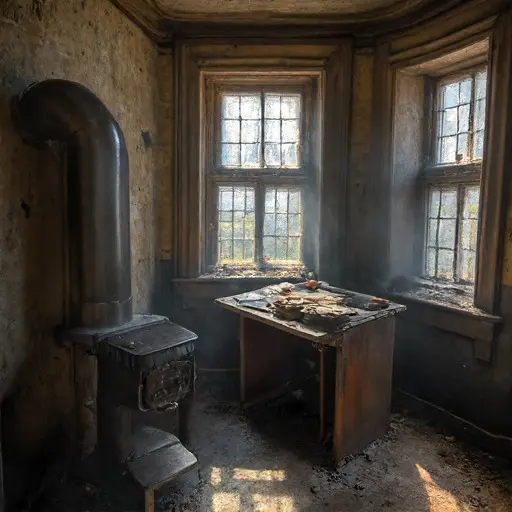
The manor of Crestwood Abbey was the largest house in the county, and its owners were often the subject of local interest, scandal, and, eventually, tragedy. Their narrative was largely shaped by Mr. Clarence Whitlock, a meticulous gazette obituary reporter who lived seasonally in the manor’s smaller north wing, hired to manage the flow of public information concerning the family’s more sensitive passages. From 1903 to 1910, he wrote of life’s endings for the local paper, his existence a quiet study of finality. He left suddenly one rainy night in 1910, immediately following a particularly scandalous, high-profile death of the manor’s young heir, and no one ever saw the reporter return.
The Stack of Unfiled Drafts
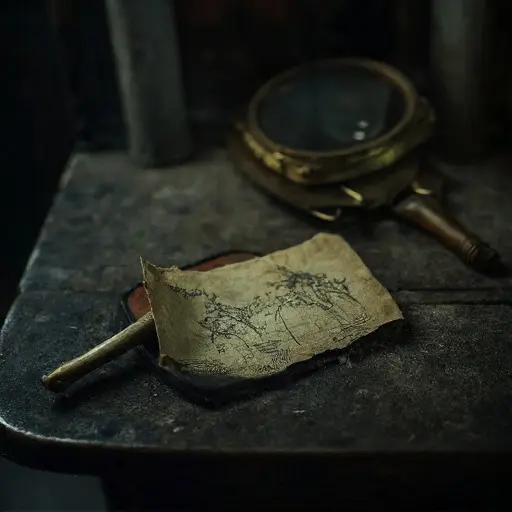
Clarence’s private space, a small room chosen for its proximity to the main hall’s events, was defined by paper. His work was contained in a heavy, mahogany filing cabinet that was jammed shut by the sheer weight of time and moisture warping the wood. When the drawers were finally prized open, they were found to be filled, not with finished articles, but with hundreds of draft obituaries. They were dated across several years, detailing potential versions of the family members’ life stories—some heroic, some damning—written in anticipation of their deaths. Tucked at the bottom of the final drawer was a heavy, linen-backed photograph of the young heir he had just reported on. The heir’s face was circled in thick, dark pencil, and across the bottom, Clarence had written a single, cryptic phrase: “The story that should never have been told.”
The Final Telegram Receipt
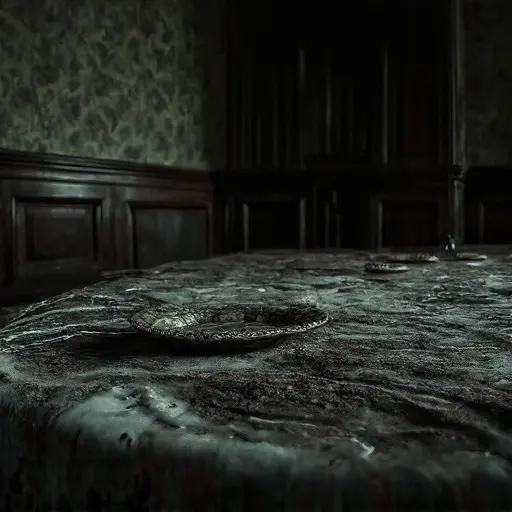
The only object that hinted at Clarence’s destination was found beneath the loose floorboard under his cot. It was not cash or jewelry, but a single, official Western Union telegram receipt. The receipt documented a pre-paid, very long message sent two hours before his disappearance to an address in Glasgow—an address known to be a small, independent publisher of radical, non-mainstream literature. The actual content of the telegram was, of course, lost to time, but the recipient suggested that Clarence’s final story was not an obituary but an exposé, a complete rejection of his carefully guarded professional boundaries. The cost of the telegram was exorbitant, suggesting a desperate, final need to communicate an important truth he could no longer hold.
The meticulous recorder of other people’s final chapters, Clarence Whitlock, chose to leave his own ending unwritten, deliberately abandoning his post and his carefully crafted life to pursue a final, dangerous narrative. He left behind a buried archive of unwritten sorrows and a single, paid receipt marking the direction of his final, untold truth, ensuring his life, unlike the subjects of his work, remained a permanent mystery of the Abbey.