🕰️ The Withered Garden Log and the Hushed Retreat of a Botanist
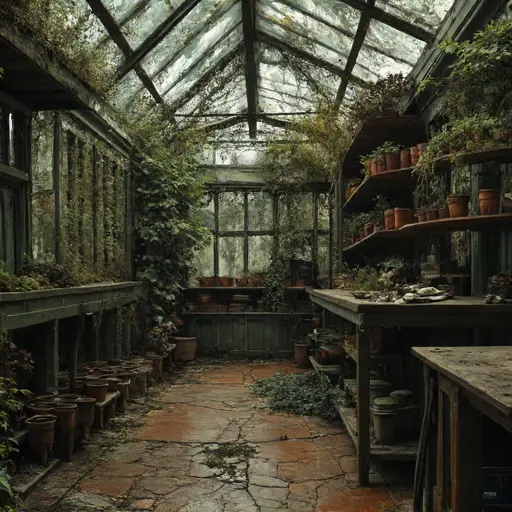
The house was known less for its architecture and more for the expansive glasshouses and walled gardens surrounding it. For ten years, the estate of Lord Ashworth employed Mrs. Beatrice Thorne, a serious and highly knowledgeable Victorian garden botanist whose world was defined by Latin nomenclature and the rigorous documentation of local flora. She lived simply in a connected potting shed, her purpose defined by growth cycles and seed provenance. When the family left suddenly in 1911 due to financial ruin, Beatrice did not follow; she simply stayed, continuing her work with a quiet resolve until the winter of 1913, when her detailed logbook ceased mid-entry.
The Catalog of Last Blooms
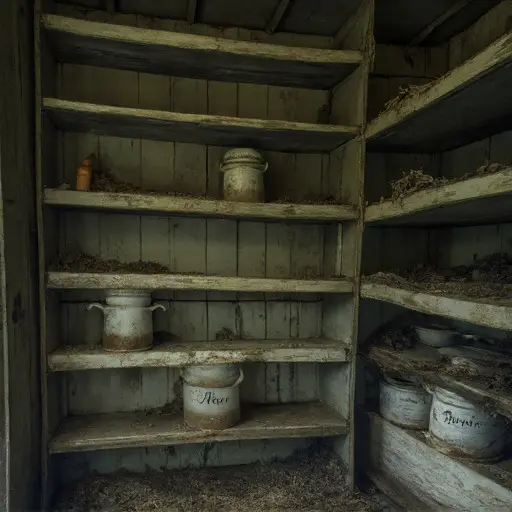
Beatrice’s core sanctuary was her small, unheated office connected to the main seed-storage room. It was here, on a cluttered mahogany desk, that investigators found her life’s work. Unlike the chaotic decay elsewhere, this room was initially tidy, preserved by its dryness and the meticulous habits of its occupant. Her most crucial record was a leather-bound, oversized volume titled The Garden Log of Ashworth Manor, Volume IV. This was no mere diary; it was a professional catalog, detailing seed rotation, soil composition, and weather records. On the very last page, beneath a detailed entry on a new strain of climbing rose, was a single, non-botanical notation, written in ink that had faded to a pale sepia: “The Redoute Rose did not survive the first frost. Perhaps nothing should.”
The Packet of Unsent Correspondence
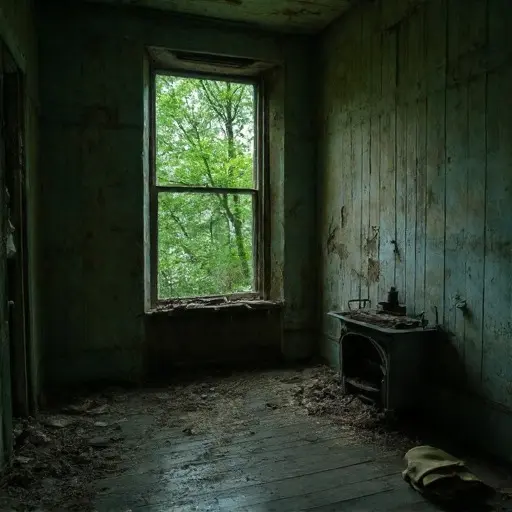
While the garden logs spoke of her professional life, a small, heavily oiled tin box, typically used for storing delicate seeds, revealed a more personal dimension. Inside, nestled amongst dried lavender, was a bundle of letters addressed to a Royal Horticultural Society peer in London—letters Beatrice never posted. They were professional in tone, discussing her novel approach to soil amendment and her concerns about disease, but their subtext held a profound loneliness. In the margin of the last, unfinished letter, she had sketched a minute, accurate drawing of the manor’s wrought-iron gates, but facing inward, as if they were closing her in rather than keeping the outside world out. The correspondence trail ended with a final, heartbreaking sentence that trailed off: “The greatest solitude is when the thing you tend has no more need of you…”
Her dedication to documentation had created a living map of the garden’s slow demise, a process she meticulously recorded until the moment she, too, faded into the larger silence of the estate. The logbook remains, a monument to a life spent trying to coax beauty and order from the earth, only to be finally absorbed by the wilderness she once cataloged.