The Shadow of Atheria Manor
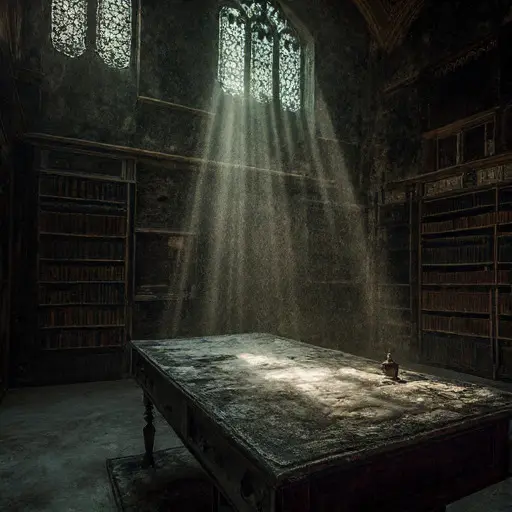
The silence inside Atheria Manor was not an empty one; it was a pressurized vacuum, heavy with the weight of unsaid things and the quiet friction of decaying wood. As the front door, warped by a century of seasonal change, yielded with a mournful groan, a fine, flour-like dust was disturbed, shimmering momentarily in the pallid sunlight. This was a place where light struggled to penetrate, and the faint, sweet scent of dry rot and antique rose perfume was still noticeable, a fragile breath lingering in the air. The vast, cavernous entryway—designed for bustling life—now felt like the throat of a great, watchful beast, observing the trespasser with the quiet intensity of time itself.
The Painter’s Obsession
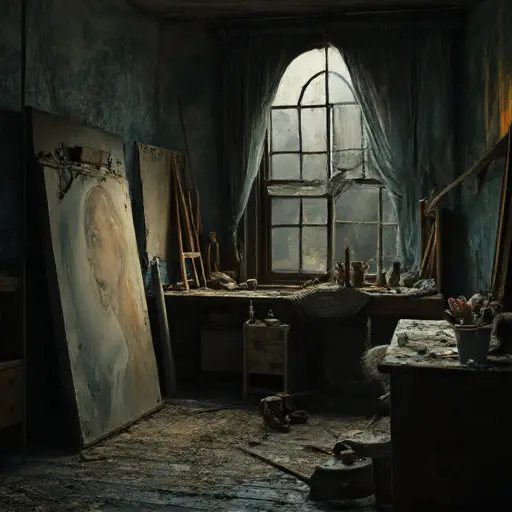
The manor’s last true occupant was Elias Thornwood, a portrait painter obsessed with capturing not just the likeness of his subjects, but the ephemeral essence of light as it faded. He believed the soul resided in the shadow. Thornwood inherited Atheria in 1888 and never left its grounds, transforming the entire third floor into a sprawling, private studio. He was known for his reclusiveness, rarely descending the grand staircase except to receive meager provisions or to send out his latest, increasingly unsettling canvases—portraits of people fading into the backdrop, their faces obscured by sheer brilliance.
He was searching for the perfect light, a fleeting, golden hour that he claimed only manifested in the manor’s dusty western gallery. It was an unreachable light, and in his futile pursuit, Thornwood himself began to fade into the mansion’s tapestry.
The Sunken Gallery
The third-floor gallery, the supposed nexus of Thornwood’s obsession, was the most disturbing room. Here, the wallpaper was not merely peeling; it had been meticulously stripped in patches by the artist himself, seeking to expose the bare plaster and the wood beneath—anything to change the way the natural light interacted with the space. Lying on the floor, beneath a heavy layer of gypsum dust, was his final, unfinished journal.
The entries chronicle a descent into a desperate fixation, not on a person, but on the house itself: “The light is not through the window, it is in the stone. It consumes me. Atheria is demanding a portrait of its own soul, and I am the only one left to paint it.” His last words, scrawled fiercely across the final page, were simply: “It is finished. The house remembers.”
A Lingering Presence
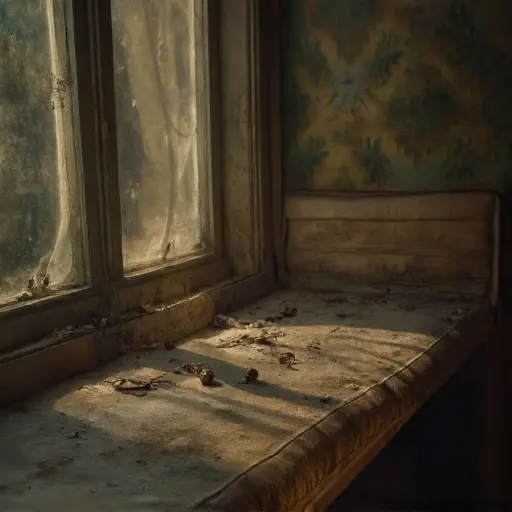
Thornwood never left Atheria Manor. His disappearance became a local, hushed mystery. Yet, his presence remains tangible. In the west-facing gallery, at precisely 4:17 PM—the hour the journal indicated the perfect light appeared—the faint, acrid smell of linseed oil and turpentine fills the air, overpowering the scent of decay. A subtle impression remains on the window seat, as if a man, thin and worn, had only just risen, leaving behind the ghost of his desperate repose.