The Cursed Whisper of Ashworth Manor
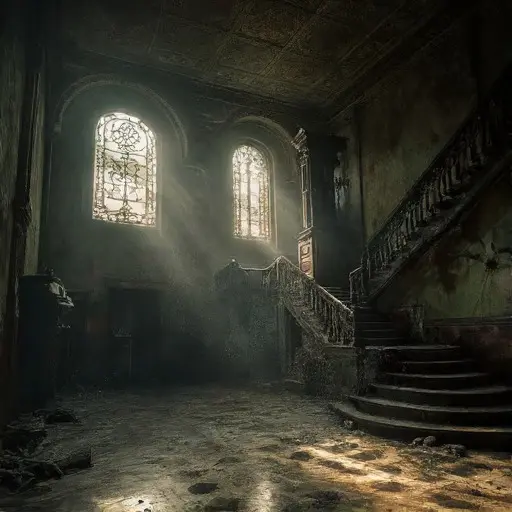
A velvet silence—thick and insulating as deep fog—is the first thing that greets you inside Ashworth Manor. It’s a silence woven from a century of closed doors, the death of laughter, and the steady, insistent accumulation of dust. Here, in the sprawling shadow of the grand staircase, the air is cold, bearing the faint, dry scent of old paper and vanished perfume. Every breath seems an intrusion. The floorboards, dark oak polished by generations of forgotten feet, complain with a long, mournful creak underfoot, and the house listens. The vast, empty rooms don’t feel unoccupied; they feel observant, holding their breath, waiting for the past to finally repeat itself. This is not merely an old building; it is a reliquary of sorrow, perfectly preserved in its decay, its quiet suspense blending the beauty of bygone opulence with the chill of something profoundly unsettled.
The Reclusive Doctor’s Study
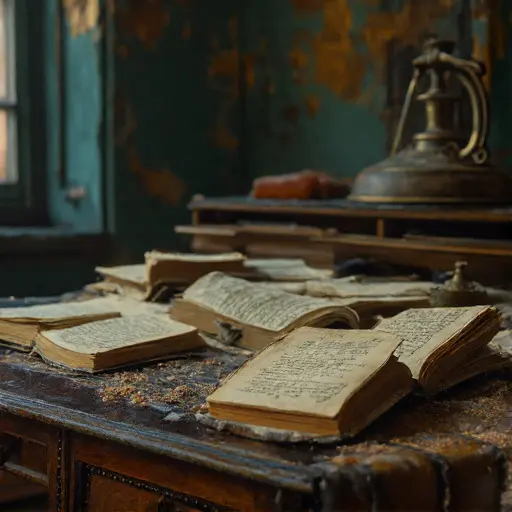
The story of Ashworth Manor is bound irrevocably to Dr. Elias Thorne, a physician of both great renown and profound reclusiveness who made this mansion his fortress in the late 1880s. Dr. Thorne was known for his unorthodox research into human memory and, less publicly, for the unbearable tragedy of losing his young wife, Elara, to a fever. His personality was a study in contradictions: fiercely rational in his profession, yet increasingly haunted and obsessive in his private life. The house became his laboratory and his prison.
In his immense study, the tragedy of Elias’s obsession lingers like the scent of dried ink and old leather. A heavy, mahogany desk dominates the room, piled high not with medical texts, but with stacks of handwritten journals bound in dark cloth. The wallpaper, a once vibrant damask, peels in delicate, sun-bleached curls near the tall window where he must have spent countless hours staring out, seeking a solution, or perhaps, simply staring into the void.
The Portrait’s Haunting Gaze
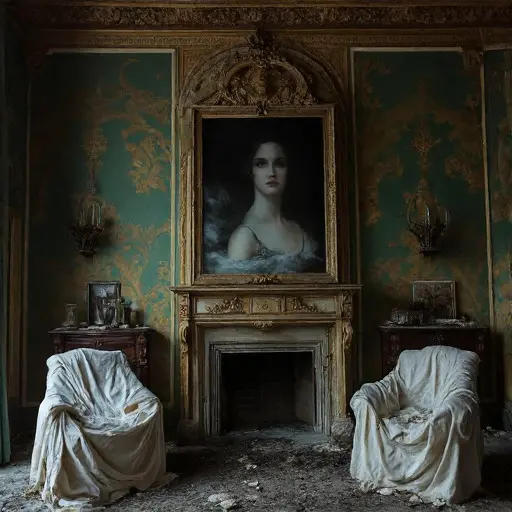
The key to the manor’s enduring melancholia lies tucked away in the upstairs gallery, beneath a grime-streaked skylight. It is a portrait, stark and beautiful, of his wife, Elara Thorne. Painted before her death, it captures her with a faint, luminous smile and eyes full of unearthly light. Elias, driven mad by grief, commissioned it, but legend holds that he was never satisfied, constantly retouching the eyes, seeking to infuse them with something—a memory, a spark of life, a soul.
The final entry in one of his journals, discovered beneath a loose floorboard near the portrait, is the chilling confession. It describes not a scientific breakthrough, but a desperate, emotional truth:
“I have poured all my sorrow, all my yearning, into her gaze. The pigments, the oils—they are merely a veil. What she reflects now is not my beloved, but the terrible emptiness I carry. She will watch this house until the last whisper of her name is gone.”
The house, in its deep, echoing silence, preserves his promise. The portrait, even in the dim light, seems unnervingly focused, reflecting the lingering presence of a love that turned into a curse. The walls of Ashworth Manor remember every stroke of the brush, every tear shed, and the unspoken grief of the reclusive doctor who could not let his wife go.