Cursed Relics of Atherton Manor
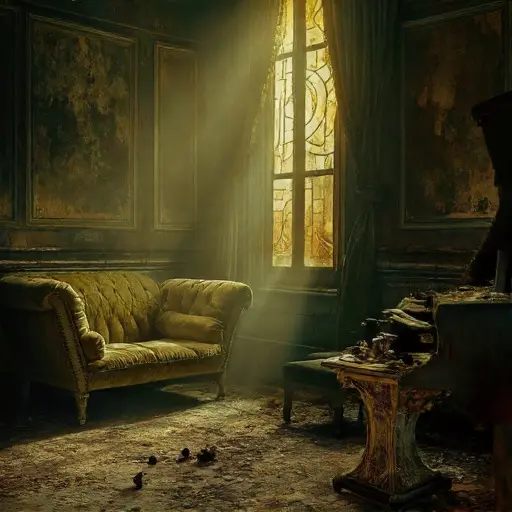
The air inside Atherton Manor did not simply hang; it settled. It was a heavy, quiet presence composed of centuries of dust, the dry rot of oak, and a faint, persistent scent of lavender and regret. Crossing the threshold was like stepping onto the shore of a silent, forgotten sea, where every floorboard creak echoed the heartbeat of the past. The tall, carved wainscoting and the once-vibrant damask walls were now merely canvases for shadow, yet in the moments the dust motes danced in the sparse light, the house seemed to breathe, watching with a thousand vacant window eyes. The silence was less an absence of sound and more a palpable weight of secrets unwilling to be disturbed.
The Painter and His Obsession
The house belonged to Elias Thorne, a portraitist of moderate fame in the 1890s, known for the almost unsettling realism of his subjects’ eyes. Elias was a solitary, obsessive man who came to Atherton not for its social standing, but for its northern exposure, which provided the perfect, consistent light for his meticulous work. He believed the light in the upper studio—a room with a colossal skylight—held a truth that ordinary daylight obscured.
Elias’s final years were spent attempting to capture a single subject: the spirit of the house itself. His last known work, left unfinished on an easel, was not a portrait of a person, but an immense, dark canvas depicting the hallway, yet the shadows seemed to writhe with forms only half-seen. “The house remembers the light, but only keeps the dark,” he scrawled in a journal found tucked beneath the floorboards of his studio.
A Glimpse into the Studio’s Gloom
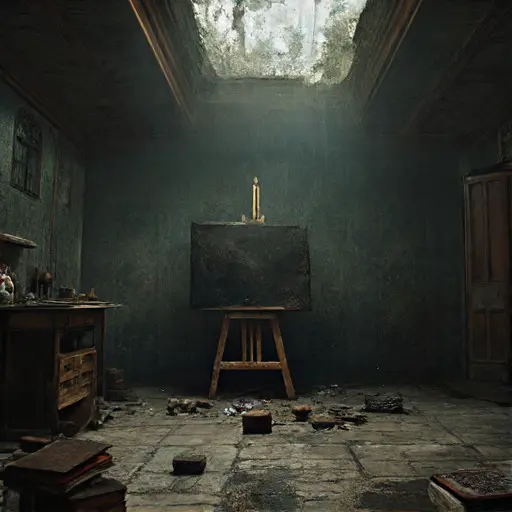
The studio was the heart of Elias’s undoing. It was here, amidst the flaking gesso and crystallized oils, that we found his final, most tragic trace. A heavy, iron-clad trunk stood open, revealing not gold or jewels, but stacks of discarded sketches, all featuring the same subject: a woman with a haunted, fragile beauty, her eyes pleading. This was Eleanor, his wife, who succumbed to consumption three years before Elias disappeared without a trace, leaving only his brushes and the dreadful unfinished canvas behind.
His journal entries, written in a hand that grew increasingly erratic, chronicled not his grief, but his fixation on preserving Eleanor’s image within the very structure of Atherton. He describes grinding the pigments himself, using ash from their hearth and, in one chilling passage, a tiny lock of her hair mixed into the oil of the final portrait’s background.
The Lingering Presence in the Library
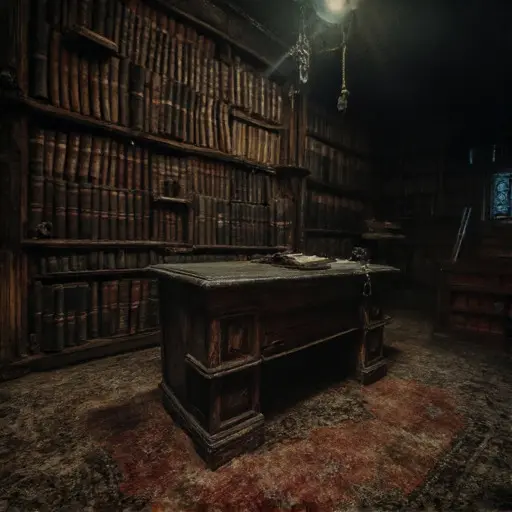
Beyond the studio lay the library, a room lined with thousands of leather-bound volumes now shedding their pages like dead leaves. The air here was heavy with the scent of old paper and leather. Upon a massive mahogany desk, still positioned exactly as it was over a century ago, sat a single, delicate carved ivory letter opener. It was an item of no great worth, yet the faint indentation of Elias’s thumbprint was still visible on the handle.
He never finished his portrait, never stopped trying to capture the light that faded with Eleanor. The house, in its cold, silent way, became his final canvas and his final resting place. The memory of his desperate, heartbreaking devotion seems to cling to the velvet drapes and the decaying spines of the books—a profound, quiet sorrow that time has failed to erase.