Thornwicke House: Eerie Abandoned Victorian Mansion
The Fading Entrance
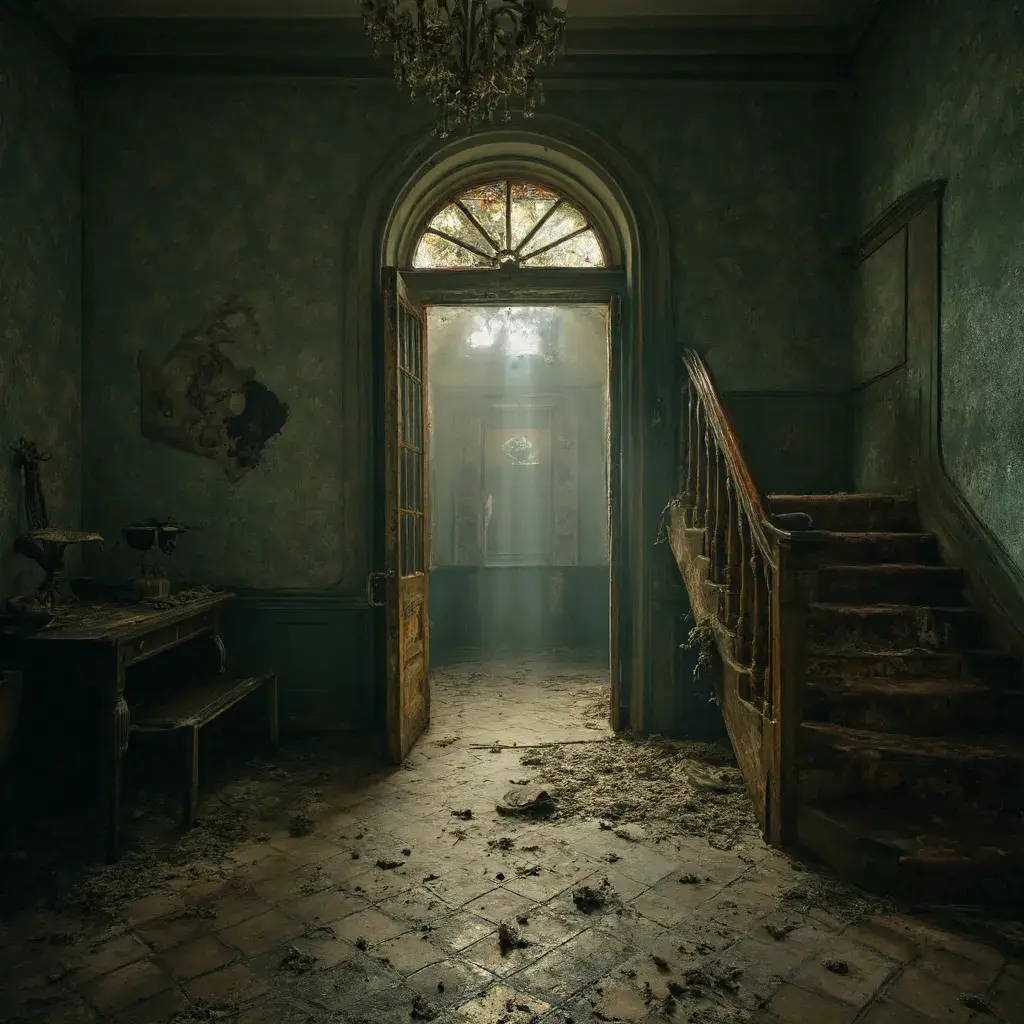
Mist clung to the sagging beams of Thornwicke House, an abandoned Victorian mansion that waited in the hush of its own memories. Even in silence, the place felt strangely alert—like it had been expecting someone to return. The air shimmered with old dust, drifting lazily through pale morning light, brushing across warped floors that creaked softly under the weight of time. Inside, the cold smelled of wood rot, paper, and something faintly sweet, as though a forgotten bouquet still clung stubbornly to life. The abandoned Victorian mansion seemed to watch, observing each breath, each hesitant step.
The house once belonged to Dr. Elias Renn, a quiet physician known for gentle hands and a mind that wandered far beyond his small town patients. He had lived here alone after the loss of his wife, burying himself in journals, sketches, and strange herbal studies. Those who knew him said he walked with a distracted tenderness, always listening to something no one else could hear.
The Doctor’s Quiet Rooms
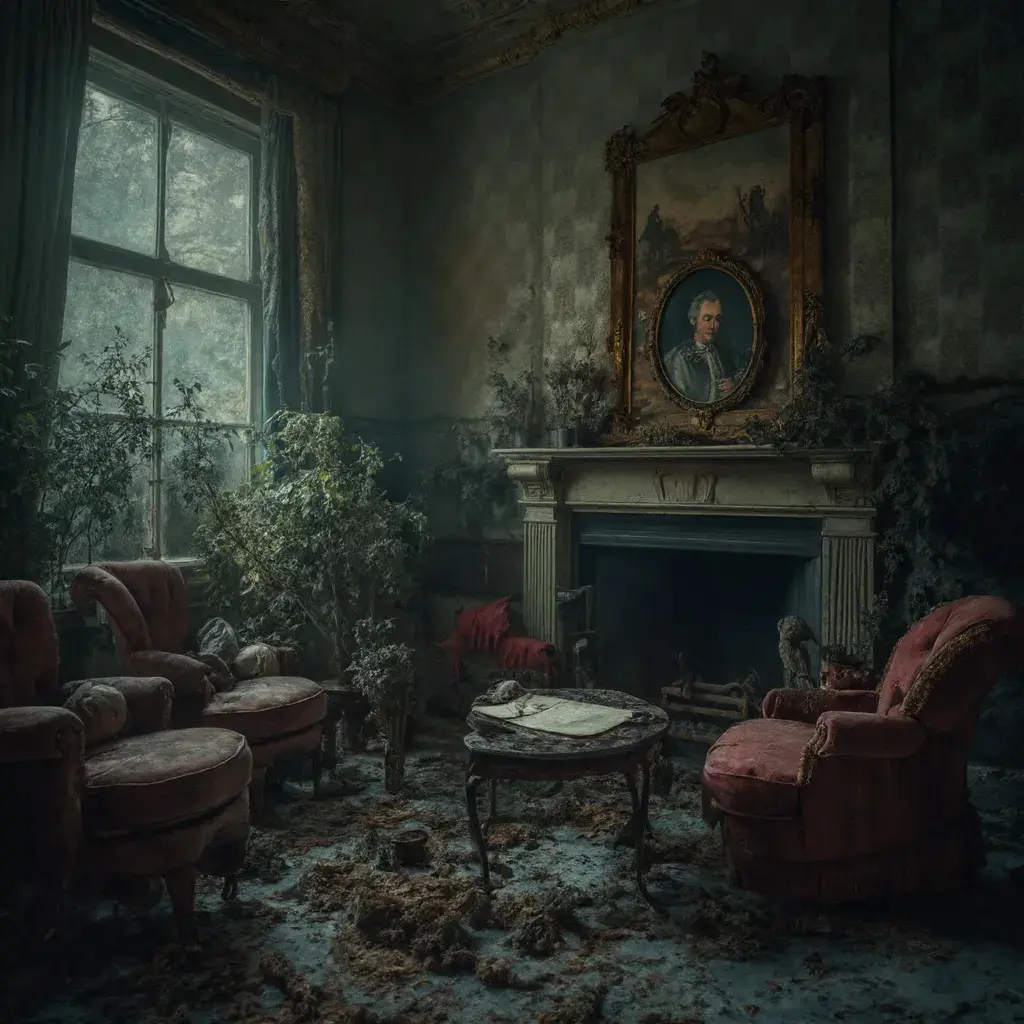
The sitting room held traces of him still—ink-stained nibs, scraps of diagnostic sketches, a teacup left exactly where his hand must have set it down. The fireplace was choked with ash long settled, yet the warmth of his presence seemed to cling stubbornly to the molding. His journals whispered of exhaustion, grief, and a yearning to fix what he could not mend: the slow unraveling of his own heart.
Dr. Renn spent long nights here, listening to the house groan as though it shared his sorrow. Locals claimed he believed the mansion breathed with him, that its shadows offered solace when human company became too sharp. Whether true or myth, the room still hums with the faint ache of lingering thought.
Where His Secrets Linger
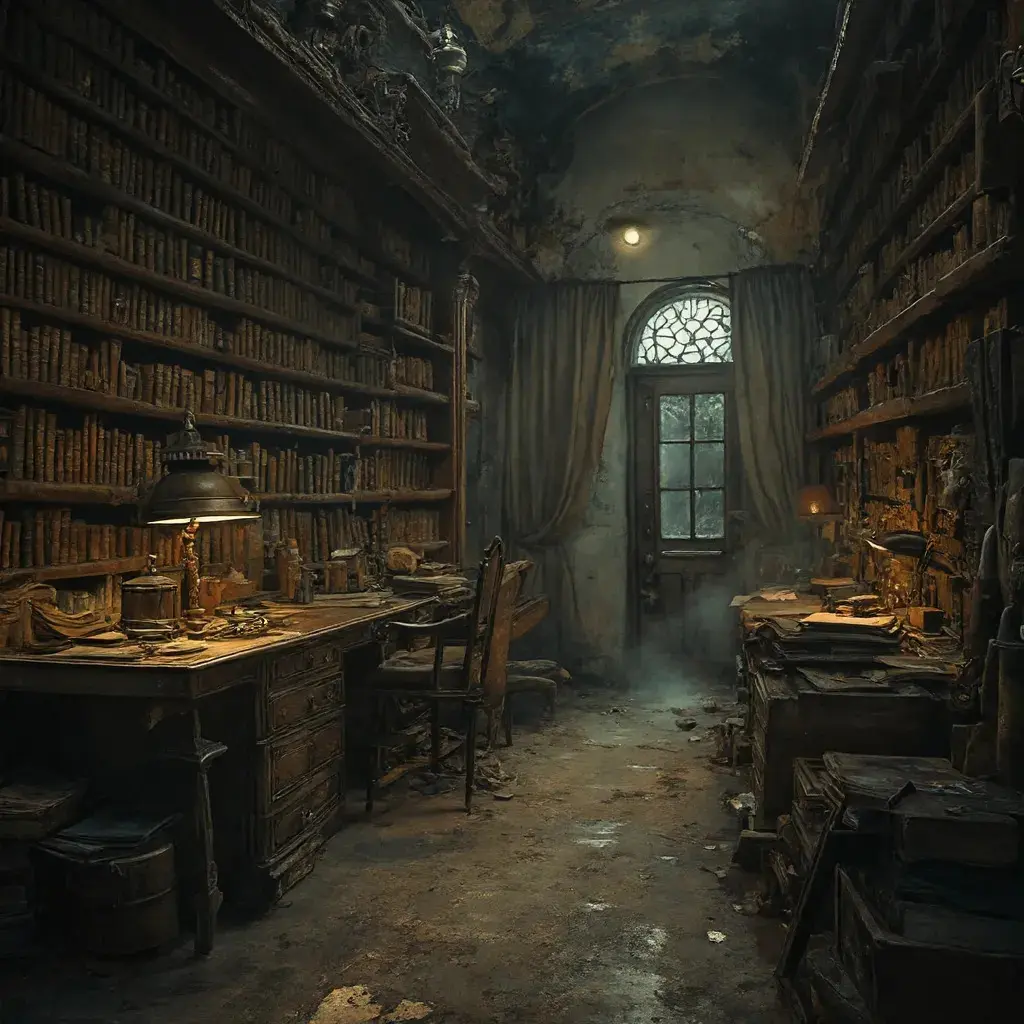
Behind a narrow door in his study lay the doctor’s final refuge. Vials clouded with mystery lined the shelves, their labels fading into obscurity. His final diary—its cover warped—rested beside a broken lamp. In looping, fragile handwriting, he confessed that the house seemed to answer him, its creaks forming replies, its drafts carrying whispers of comfort.
As the seasons turned and his strength waned, Dr. Renn wrote less of remedies and more of the mansion’s presence—how it felt like someone staying beside him, quietly holding the pieces he could no longer keep together.
And even now, when the wind sighs through Thornwicke House, it feels as though the walls remember him—softly, faithfully—long after flesh and bone slipped away.